
What is a modular data center? Redefining data center construction standards.
What is a modular data center? Redefining data center construction standards.
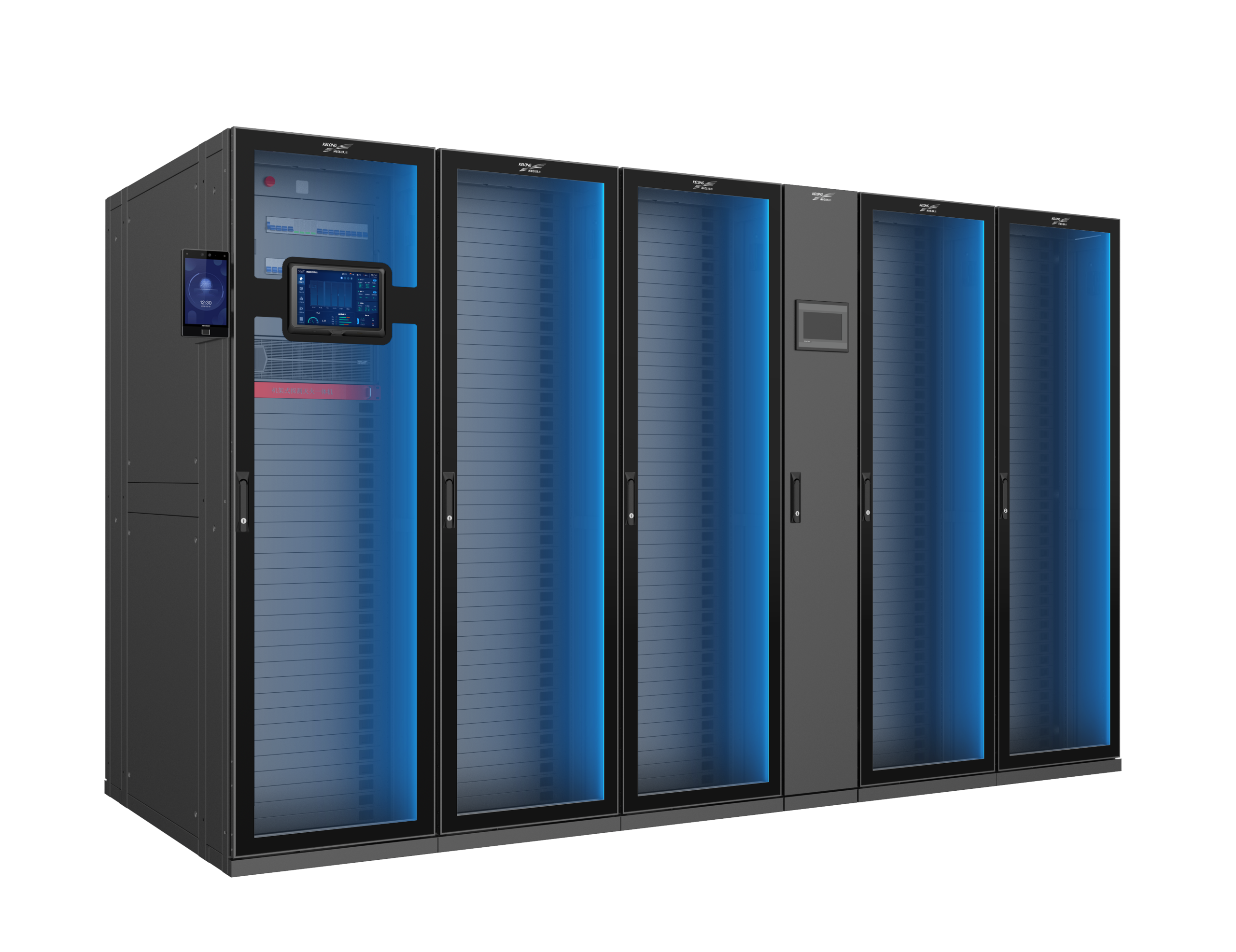
Driven by the dual forces of digital transformation and the explosive growth of AI computing power, the traditional data center construction model of "building the shell first, then filling in equipment" has become increasingly inadequate.modular data center(Modular Data Center), as a prefabricated and highly integrated infrastructure solution, is becoming the mainstream choice for newly built and renovated data centers worldwide. It is not a simple stacking of equipment, but rather integrates cabinets, power supply and distribution (includingModular UPS), refrigeration, monitoring, fire protection, and other subsystems are prefabricated into standardized "building modules" within the factory. On-site, they only need to be assembled and debugged like "building blocks," allowing for rapid delivery and use.
Why are enterprise CIOs and IT leaders paying attention to modular data centers?
Behind this trend lies the precise strike that modular data centers deliver to the "pain points" of traditional construction models:
- Rapid deployment to seize business opportunities:Traditional data centers typically require 18-24 months from construction to acceptance, while modular solutions can compress the delivery cycle to3-6 monthsFor industries with extremely high time sensitivity, such as the internet and finance, this directly translates into a competitive advantage.
- Elastic scaling to match business growth:By adopting a strategy of "deploy on demand, expand gradually," initial investment can be reduced.20%-30%This effectively avoided the accumulation of funds caused by excessive planning.
- High efficiency and energy saving, meeting the "dual carbon" requirements:Through precision airflow management technologies such as enclosed cold/hot aisles and row-level proximity cooling, combined with high-frequency modular UPS, the annual average PUE (Power Usage Effectiveness) can be reduced to as low as1.2-1.3, significantly reducing operating electricity costs.
Core focus: Three key technical elements of modular data centers
When evaluating or selecting a modular data center solution, the technical details across the following three dimensions determine the system's long-term reliability and return on investment, and they are also the most frequently searched long-tail questions by professionals.
1. Power Supply and Distribution Architecture: How Can Modular UPS Achieve "Change as Needed"?
Modular UPSIt is the "heart" of the modular data center. Unlike traditional tower UPS systems, it adopts an or redundant architecture, and the power modules support hot-swapping. When the load increases, simply plug in a new power module online to expand capacity without powering down. In actual selection, key considerations include:
- Does it support "Smart Sleep" technology?Automatically shut down some modules under low load rates to improve overall machine efficiency.
- Compatibility of lithium batteries and lead-acid batteries.In current high power density scenarios, lithium batteries (especially lithium iron phosphate) have become the mainstream backup power choice for modular data centers due to their long cycle life and small footprint.
2. Thermal Management Solutions: How to Choose Between Air Cooling and Liquid Cooling, and How Can They Coexist?
As the power density of a single rack evolves from the traditional 5-8kW to10-15kW or even above 50kW(AI training clusters) are surging, making heat dissipation the biggest challenge.
- Air-cooling solution: Still applicable to medium and low density scenarios (<10kW/rack), using row-level air conditioning plus enclosed cold aisle, with mature technology and relatively low initial investment.
- Liquid cooling solution: For high-density computing nodes, liquid cooling (especially cold plate liquid cooling) can remove over 70% of the heat from CPUs/GPUs, significantly reducing fan noise and energy consumption. The current mainstream trend is"Wind-liquid fusion"—That is, both air-cooled aisles and liquid cooling distribution units (CDUs) are deployed simultaneously within the modular data center to accommodate mixed loads.
3. Operations and Maintenance Management: How to achieve "unattended" predictive maintenance?
Modular data centers are equipped with a large number of sensors and an intelligent management platform (DCIM). Advanced operations and maintenance systems have introduced AI algorithms that can, based on historical data,UPS battery State of Health (SOH)、Fan bearing lifespan.、Server inlet air temperature trendConduct predictive analysis and issue potential fault warnings 2-4 weeks in advance, transforming "passive firefighting" into "active prevention," which is also the most urgent need for edge computing nodes.
Typical scenarios: What specific businesses are modular data centers suitable for?
Move beyond the fixed impression of "large data centers"; the flexible form of modular computer rooms makes them more cost-effective in the following scenarios:
- AI/HPC high-performance computing cluster:Requires prefabricated shelter with high power density and liquid cooling compatibility.
- Edge computing node:Such as smart factories, vehicle-to-everything roadside units, and chain supermarkets, which require miniaturized, integrated solutions.Micro data center (micro modular data center), supports remote operation and maintenance.
- Enterprise private cloud or disaster recovery data centerFor large and medium-sized enterprise headquarters with clear requirements for space utilization and PUE.
- Renovation of an old computer room.: In cases where building floor height and load-bearing capacity are restricted, modular solutions can be "tailor-made" to achieve high-density deployment within limited space.
Selection Guide to Avoid Pitfalls: 3 Common Issues to Note When Deploying Modular Data Centers
Based on a large number of actual delivery cases, the following points are often overlooked, yet they may affect long-term operation:
- Building load-bearing capacity and floor height pre-review.Ensure that the floor load-bearing capacity meets the full-load weight of the battery packs (especially lithium batteries) and cabinets before deployment, and that the clear ceiling height satisfies the installation requirements for hot/cold aisle containment components.
- Prefabricated interface between cables and busways: To leverage the plug-and-play advantages of modularization, it is recommended to use prefabricated industrial connectors or busways for distribution lines to avoid on-site pouring.
- Consistency in later-stage expansion.Ensure that the selected brand still offers the same model of power modules and cabinet accessories within 2-3 years; otherwise, compatibility issues between new and old equipment may arise during expansion.
Conclusion: Is the modular data center the "standard answer" to the future data center?
From a technological evolution perspective, modular data centers are not a transitional solution but a step toward the advancement of data center infrastructure."Productization, servitization, and intelligentization."It is an inevitable form. It perfectly aligns with the core demands of current businesses for agility, green and low-carbon operations, and cost-effective maintenance. For enterprises planning or upgrading data centers, choosing a modular solution provider with full-chain integration capabilities based on actual business loads is more strategically significant than merely comparing prices of individual equipment.
Extended thinking: If your business involves AI large model training or high-frequency quantitative trading,How can modular data centers optimize the power supply chain for "millisecond-level response"? Welcome to discuss further with us in the comments section or via private messages on the platform.


So,I like it
good!
I like this
good